After the storm: a roof checklist for Conroe homeowners
The first two days after hail, a derecho or a hurricane, in order — safety, photos, a ground-level damage check, tarping, and how to deal with the trucks that show up the next morning.
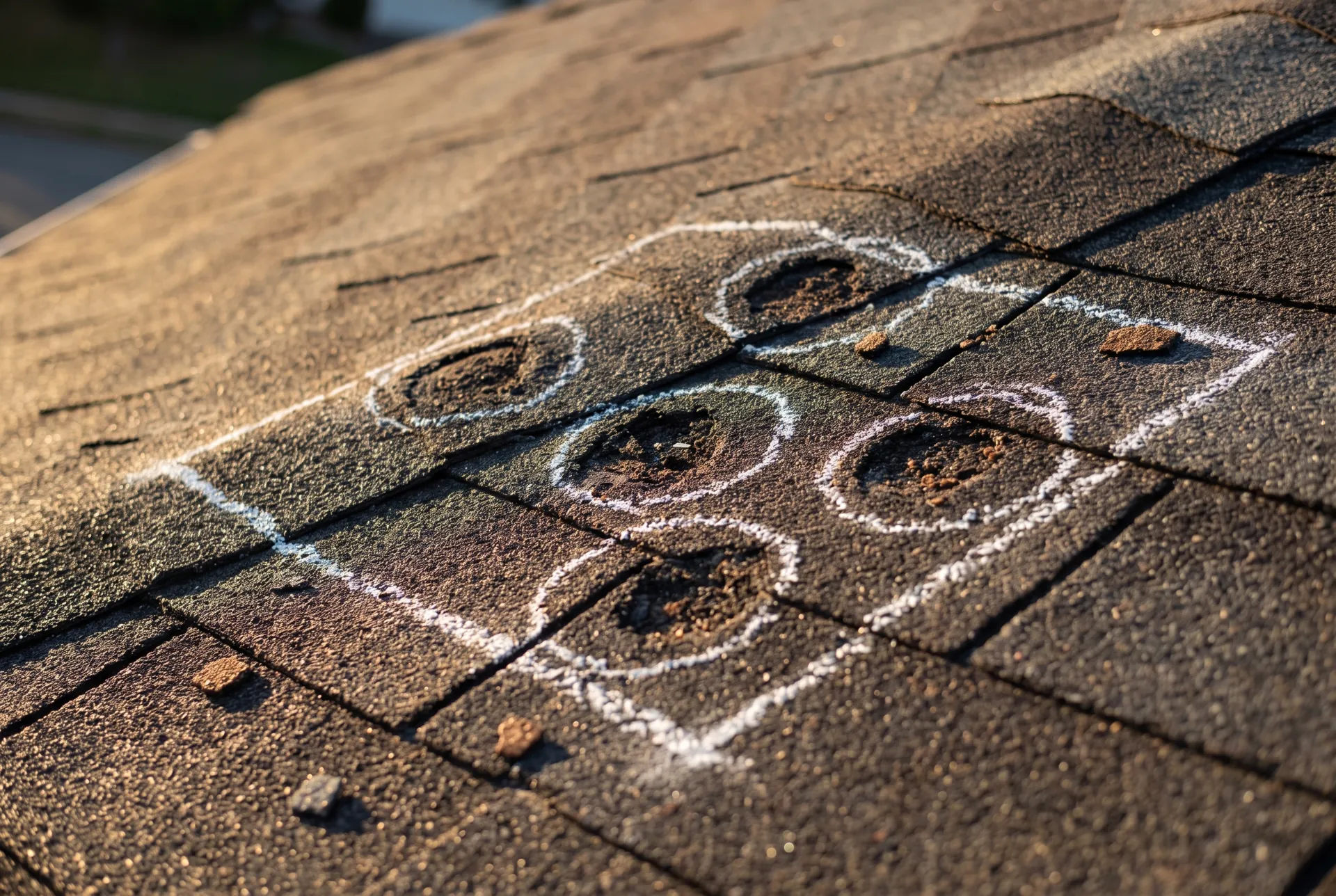
Montgomery County got two of these in eight weeks in 2024: the derecho of May 16 with 80-to-100-mph gusts on the north side of the metro, and Hurricane Beryl on July 8 with 69-mph gusts in Conroe and 51,000 Entergy customers without power. The next one is a question of when. This is what to do when it comes, in the order it matters.
First: safety
- If a tree is on the house, a line is down, or you smell gas — get out from under it and call 911 and Entergy before anyone else. Then call us.
- Don't go on the roof. Wet shingles and a steep pitch after a storm put people in the hospital every year. Everything below can be done from the ground.
- If water's coming through a ceiling, put a bucket under it and poke a small hole in the bulge to let it drain — it saves the drywall.
Second: photos and notes (same day)
- Photograph hail on the ground next to something for scale — a coin, a golf ball — with the time. Photograph the yard, the car, the patio furniture.
- Photograph every dent you can find on soft metals: gutters, downspouts, roof vents, the AC condenser fins, the mailbox, window screens, the grill. These prove hail size and direction.
- Photograph shingles, ridge cap or tabs in the yard, and any daylight or water you can see from the attic hatch.
- Write down the date and the time the storm hit. Your claim needs a date of loss.
Third: a ground-level damage check
Hail: look for a heavy dump of granules at the downspout outlets and in the gutters, dents on every soft metal, and (with binoculars) dark spots or bare patches on the shingles. Wind: look for missing tabs or ridge cap, shingles lifted at the edges, debris in the valleys, and a tarp-worthy hole. Trees: look for limbs on the roof, scrapes on the shingles where a limb slid off, and punctures at the gutters. If any of it is there, get the roof walked — free — before you call your insurer.
Fourth: tarp what's open
If the roof is open anywhere, it needs a tarp the same day — heavy, battened with furring strips and cap nails, not a blue sheet weighed down with bricks. Keep the invoice: emergency mitigation is a covered expense on nearly every Texas policy. We tarp any hour.
Fifth: read your policy, then decide about the claim
Find the wind/hail deductible (often 1–2 percent of the dwelling coverage), the roof coverage type (RCV, ACV or a schedule) and any cosmetic exclusion. Get a written inspection with hit counts and photos. Then decide, with the numbers in front of you, whether to file. The claim guide walks through it.
Sixth: the trucks in the morning
After every county-wide storm, out-of-state crews knock every door in Grand Central Park, Woodforest and Valley Ranch with a clipboard and a story. Don't sign anything on the porch — a 'free inspection form' is often a contingency agreement that binds you to them for the job. Ask any roofer for a Texas certificate of insurance (general liability and workers' comp), a local address that isn't a hotel, and references in the county. And walk away from anyone who offers to 'take care of' your deductible: it's illegal in Texas and it gets claims denied.
Seventh: the deadline
Most Texas policies give you one year from the date of loss to file, some less. Beryl was July 8, 2024; the derecho was May 16, 2024. If a roof went through either and hasn't been inspected, don't wait for a leak to find out.
Related questions
Should I call my insurance company first or a roofer first?
A roofer, for the inspection — so you know what you have before you open a claim that goes on your record. Then the insurer, with the report in hand.
The adjuster is coming next week. Should you be there?
Yes. We meet adjusters on the roof so the damage is seen, not summarized, and so the scope is complete the first time. It costs you nothing.
Is my roof damaged if I can't see anything from the ground?
Very possibly. Wind creases shingles without removing them; hail bruises shingles without knocking them off. Both are found on the roof, not from the driveway. If the soft metals are dented, the shingles are too.
What if my neighbors all got new roofs and mine 'wasn't damaged'?
Ask for the adjuster's report, get an independent inspection, and if damage was missed, request a re-inspection. Hail is local, but it isn't that local.
How fast can you tarp?
Same day, any hour, dispatched by priority. During a county-wide event we may be an hour or two out and we'll tell you honestly.
Can I clean up the debris myself?
The yard, yes. The roof, no — leave limbs and debris on the roof for the crew; walking a storm-damaged roof is how injuries happen, and the debris is part of the photo record.